 Fraunhofer Institute for Applied Optics and Precision Engineering IOF
Successful Demonstration of Quantum Communication Between Bavaria, Thuringia & Berlin
Conclusion of the QuNET initiative: Federal Minister of Research Bär Launches Quantum Communication Network Between Bavaria, Thuringia, and Berlin
The QuNET Research initiative, which received 125 million euros in funding by the German Federal Ministry of Research, Technology and Space (BMFTR), concluded its final key experiment today with a live demonstration. Together with representatives from the federal states of Bavaria, Berlin, Saxony, and Thuringia, Germany's Federal Minister of Research, Technology and Space Dorothee Bär activated a cross-state experimental network for quantum communication in Berlin.
Since 2019, the German Federal Ministry of Research, Technology and Space (BMFTR) has been supporting research into the technological foundations for highly secure communication through the QuNET initiative. At the heart of the initiative is quantum key distribution (QKD). The core consortium includes the Fraunhofer Institute for Applied Optics and Precision Engineering IOF, the Fraunhofer Heinrich Hertz Institute for Telecommunications HHI, the Max Planck Institute for the Science of Light (MPL), the Institute of Communications and Navigation at the German Aerospace Center (DLR), and Friedrich-Alexander-Universität Erlangen-Nürnberg (FAU).
“Today, with the final key experiment of the QuNET initiative, we have reached an important milestone in Germany’s High-Tech Agenda. I am pleased that we were able to see live here today how quantum communication can help us protect our sensitive data from attacks, even in the quantum age of the future. This is how we strengthen our technological sovereignty and value creation. The task now is to quickly translate this research into widespread application for the cybersecurity of tomorrow.”

Federal states provide sub-networks, federal minister connects them
Marking the official conclusion of the QuNET Initiative, researchers conducted their final and largest key experiment in Berlin on October 28 in the presence of the Federal Minister. Working alongside partners from industry, academia, and society, they successfully demonstrated the exchange of quantum-encrypted data across a realistic, cross-state network.
To this end, political representatives from the participating federal states first activated their regional subnetworks on site in Erlangen, Erfurt, and Berlin. For Bavaria, this was done by Minister-President Dr. Markus Söder; for the State of Berlin, by Governing Mayor Kai Wegner; and for Thuringia, by Minister-President Mario Voigt. Also represented were the state of Saxony, represented by Dr. Babett Gläser, Head of the Research Division at the Saxon State Ministry of Science, Culture, and Tourism. Through their respective state initiatives, the federal states contributed significantly to the development of local research infrastructures for quantum communication, upon which the cross-state QuNET network was built.
Following the successful deployment of the regional subnetworks, Federal Minister of Research Dorothee Bär gave the start signal in Berlin for the interconnection of these subnetworks into a joint Quantum Communications network, followed by a live demonstration.


Live demonstration using fictitious health data
Several key experiments paved the way for this: As early as 2021, QuNET researchers in Bonn had demonstrated a quantum-secure communication link in the government district. In 2023, they combined free-space and fiber-optic links in Thuringia to create a hybrid quantum connection. This was followed in 2024 by a network with multiple nodes in Berlin, and by 2025, a mobile quantum network node was demonstrated in Bavaria using an aircraft.
During the most recent live demonstration in Berlin, which was conducted under the technical leadership of the MPL and FAU, various quantum cryptography systems were interconnected to form a network. The demonstration focused on a real-world application scenario: Fictitious pharmacy invoices were transmitted in a quantum-secure manner from Jena University Hospital via DATEV to the Bundesdruckerei. The transmission itself took place over conventional communication networks consisting of fiber-optic cables. This is because QuNET investigated not only components and systems for Quantum Communication but also their integration into real-world and already widely existing communication infrastructures.
“The future of Quantum Communication will be shaped by a hybrid, quantum-secure infrastructure consisting of fiber-optic networks, free-space networks, and satellite networks,” said Prof. Dr. Andreas Tünnermann, spokesperson for the QuNET Initiative. “In this final QuNET key experiment, we are demonstrating exactly that: that different systems and regional networks can function together. This brings us a crucial step closer to the goal of a practically usable network infrastructure for highly secure communication.”
Prof. Christoph Marquardt, scientific director of the live demonstration in Berlin, adds: “With QuNET, we have created a strong ecosystem for quantum-secure communication networks. The key to this success lies in the close collaboration between research institutions and numerous companies throughout Germany, with whom we have jointly laid the technical foundation for a reliable and marketable security architecture.”
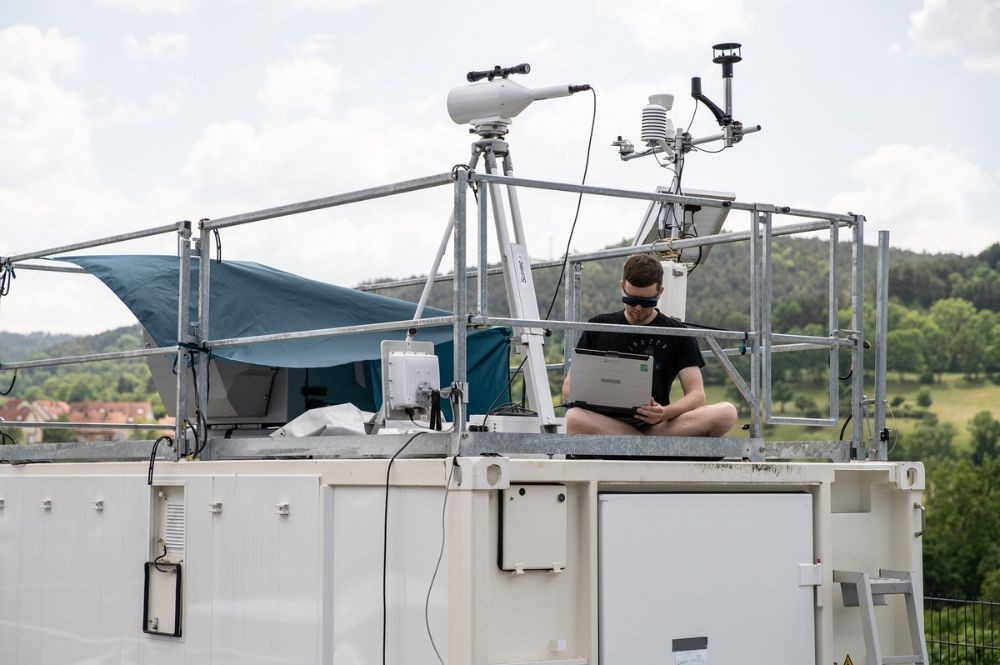
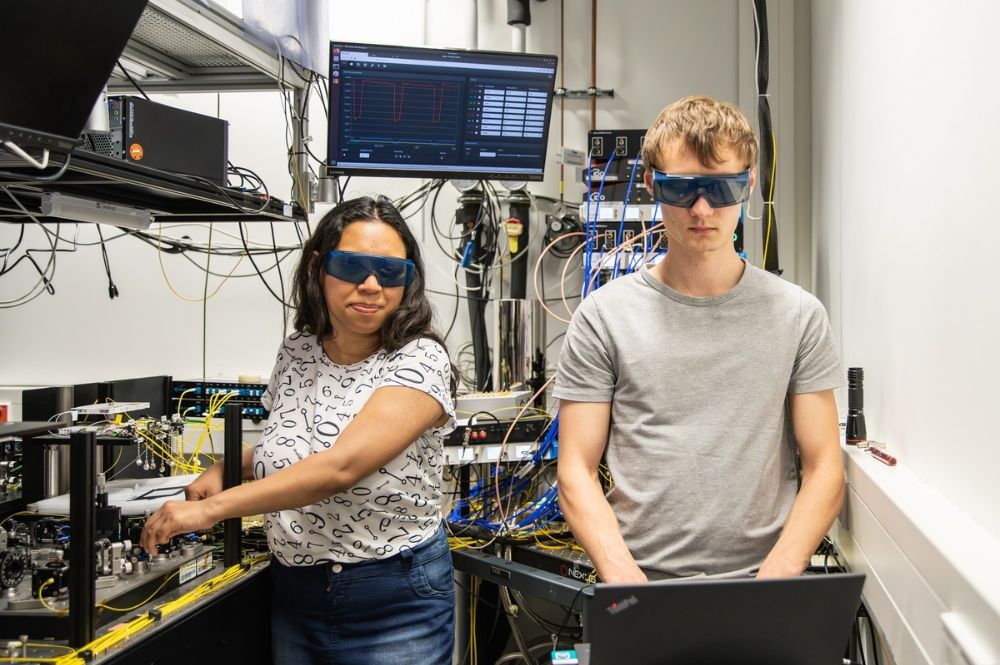

QuNET+ Brings Technology Closer to Practical Application
To integrate quantum communication into real-world communication infrastructures, the QuNET Initiative has always strengthened close collaboration between academia and industry, thereby making a significant contribution to the development of an innovation ecosystem for quantum communication in Germany. To this end, the so-called QuNET-Plus projects (QuNET+) were launched alongside the initiative to bridge the gap between research and industrial application. Since 2022, as part of QuNET+, companies and research institutions have developed building blocks for future Quantum Communication networks in a total of twelve projects—ranging from detector modules and laser sources to data post-processing, optical routing, and key management, as well as test laboratories and optical ground stations, such as those located in Oberpfaffenhofen and Jena.
QuNET+’s industry partners include renowned companies from the fields of cybersecurity, telecommunications, electronics, photonics and aerospace. The industry partners also focus on standardization and scaling. This includes standardized, interoperable interfaces for key management systems as well as the development of methods for testing, qualifying, and certifying Quantum Communication technologies.
After QuNET comes the next generation
With the live demonstration in Berlin, the QuNET initiative is now nearing the end of its seven-year research period. At the same time, the next phase is beginning—moving from an experimental quantum communication network focused on QKD applications toward value creation for the technologies and research results in Germany.
“The expertise, technologies, and industry partnerships established through QuNET and QuNET+ form the foundation for further developing key technologies for secure communication in Germany and translating them into commercial applications,” concludes QuNET spokesperson Andreas Tünnermann. “This is not just about protecting sensitive data, but also about technological sovereignty and the opportunity for German and European companies to participate in a future market for highly secure communications. In addition to scientific and technical findings, the initiative’s output is reflected not only in patents but also in several startups that have transformed the initiative’s developments into marketable products,” says Tünnermann.
Download area | Press images and PDF-Press Release
Last modified: